
Start with the need, not the label
Families often begin with a broad worry: Mom is alone too much, Dad seems less engaged, or the week feels long between visits. That concern does not automatically mean someone needs a caregiver. It does mean it is worth separating social needs from personal-care and safety needs.
Non-medical companionship is built around time together. Home care is built around assistance with daily living. Some older adults need one, some need both, and their needs can change over time.
Companionship is a fit when company is the main need
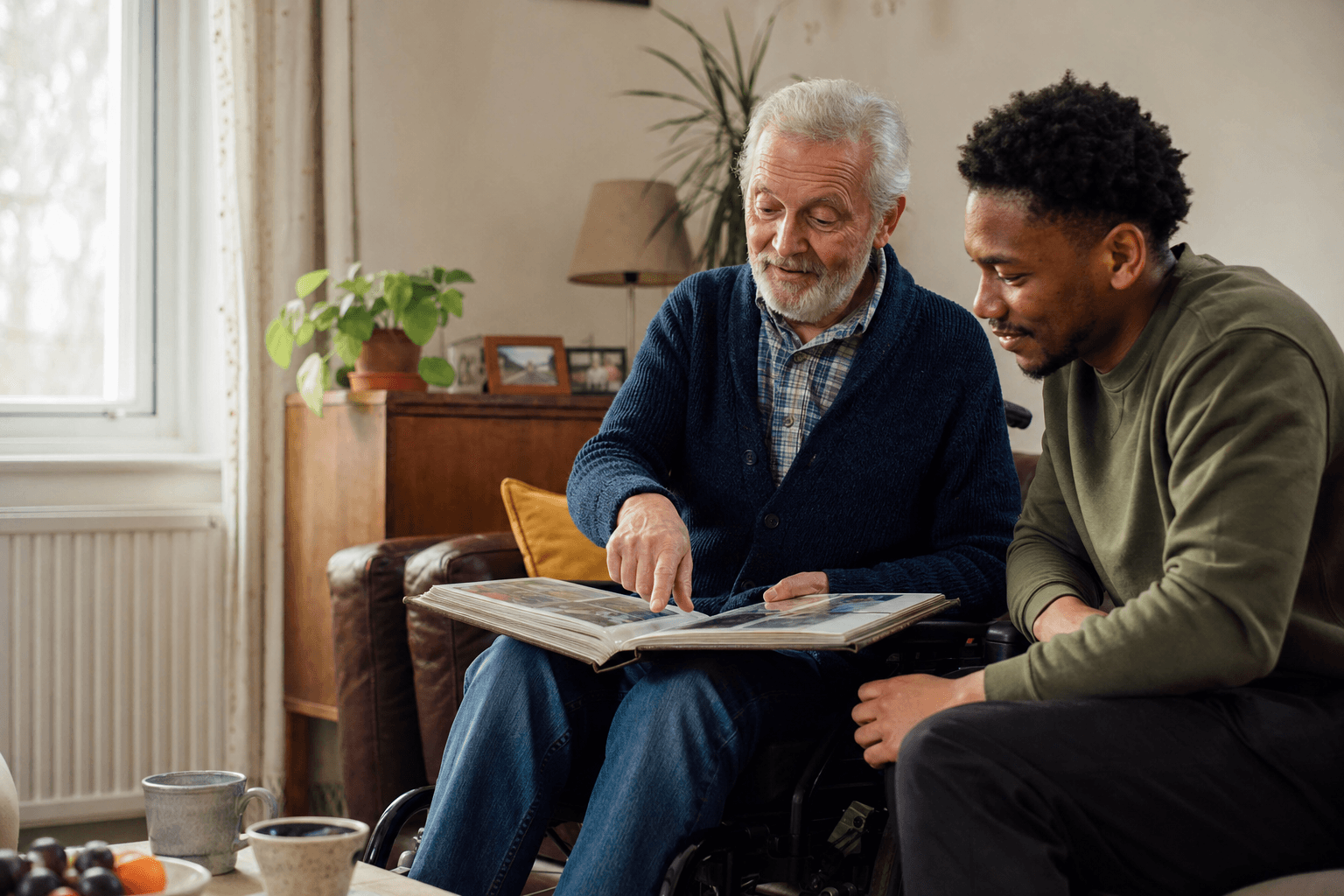
A companion visit can be a good fit when an older adult is safe at home and can manage their personal care, but would enjoy another person in the rhythm of the week.
- Conversation, cards, reading, or sharing a cup of tea
- A walk or simple outing together when it is safe to do so
- Making a simple snack or meal side by side
- Reading mail together without handling money, passwords, or accounts
- A familiar hour that gives an adult child peace of mind from a distance
Home care is the better starting point for hands-on support
Choose an appropriately licensed or qualified care provider when the person needs physical assistance, health-related support, or supervision that cannot safely be provided by a social companion.
- Bathing, dressing, toileting, or other personal care
- Medication administration or medical monitoring
- Lifting, transfers, or mobility assistance that requires training
- Dementia-related supervision, wandering prevention, or overnight coverage
- Meal support tied to a clinical diet or swallowing plan
A simple decision test
Ask: If the visitor did nothing except spend an attentive hour with my parent, would the visit still meet the main need? If yes, companionship may be the right category. If the visit would be unsafe or incomplete without hands-on assistance, start with home care or speak with the person’s healthcare team.
When needs overlap, services can complement each other. A home-care professional can handle essential care while a companion adds social time that is not organized around tasks.
Where Popovers draws the line
Popovers visits are non-medical and last one hour. Companions do not administer medication, provide personal care, lift or transfer someone, perform heavy housework, or access financial and health accounts. Errands are done together; companions do not independently run errands or drive a recipient on their own.
If you are unsure whether a visit would be appropriate, tell us what the person needs before booking. Clear boundaries protect the older adult, the family, and the companion.